Tour Overview
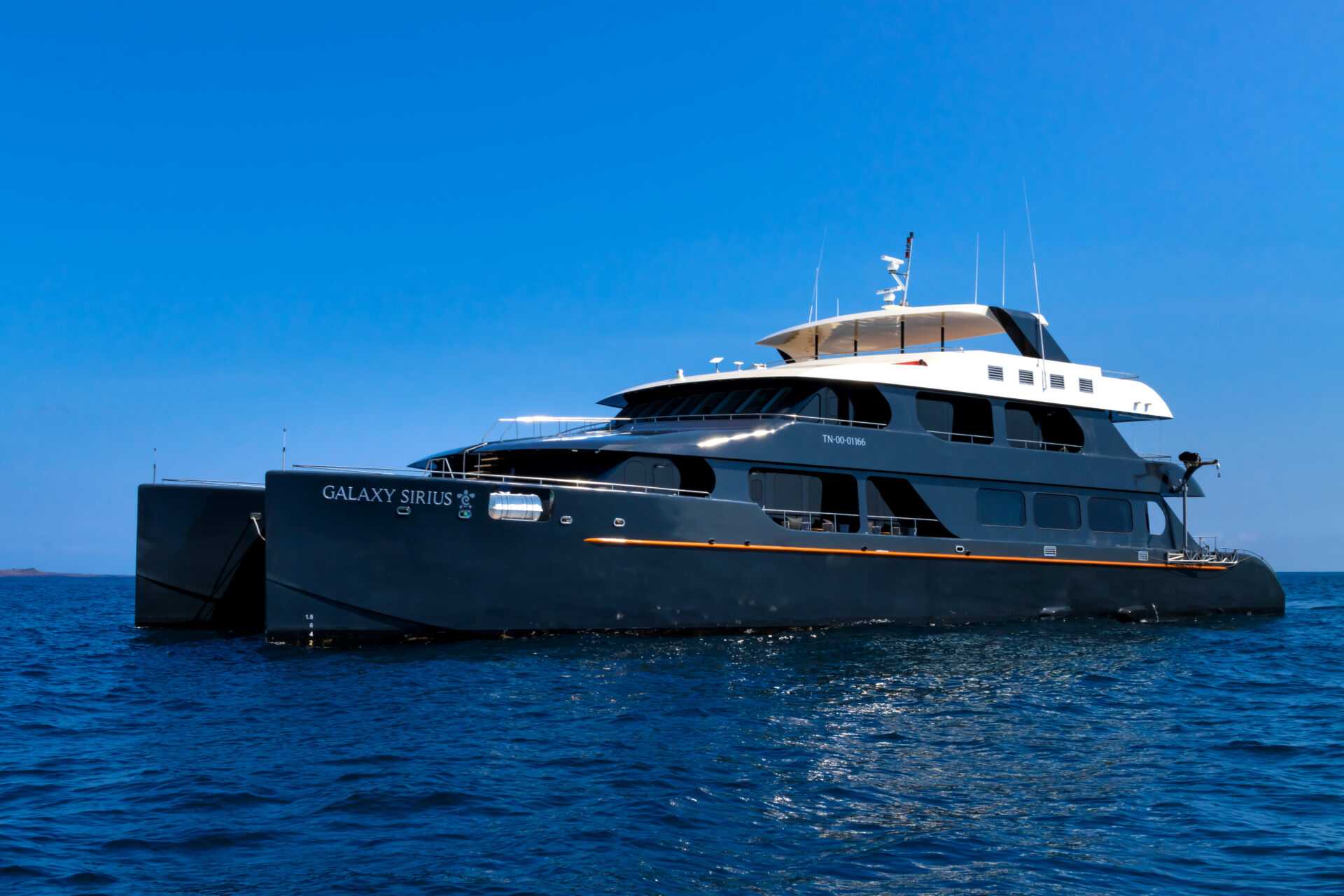
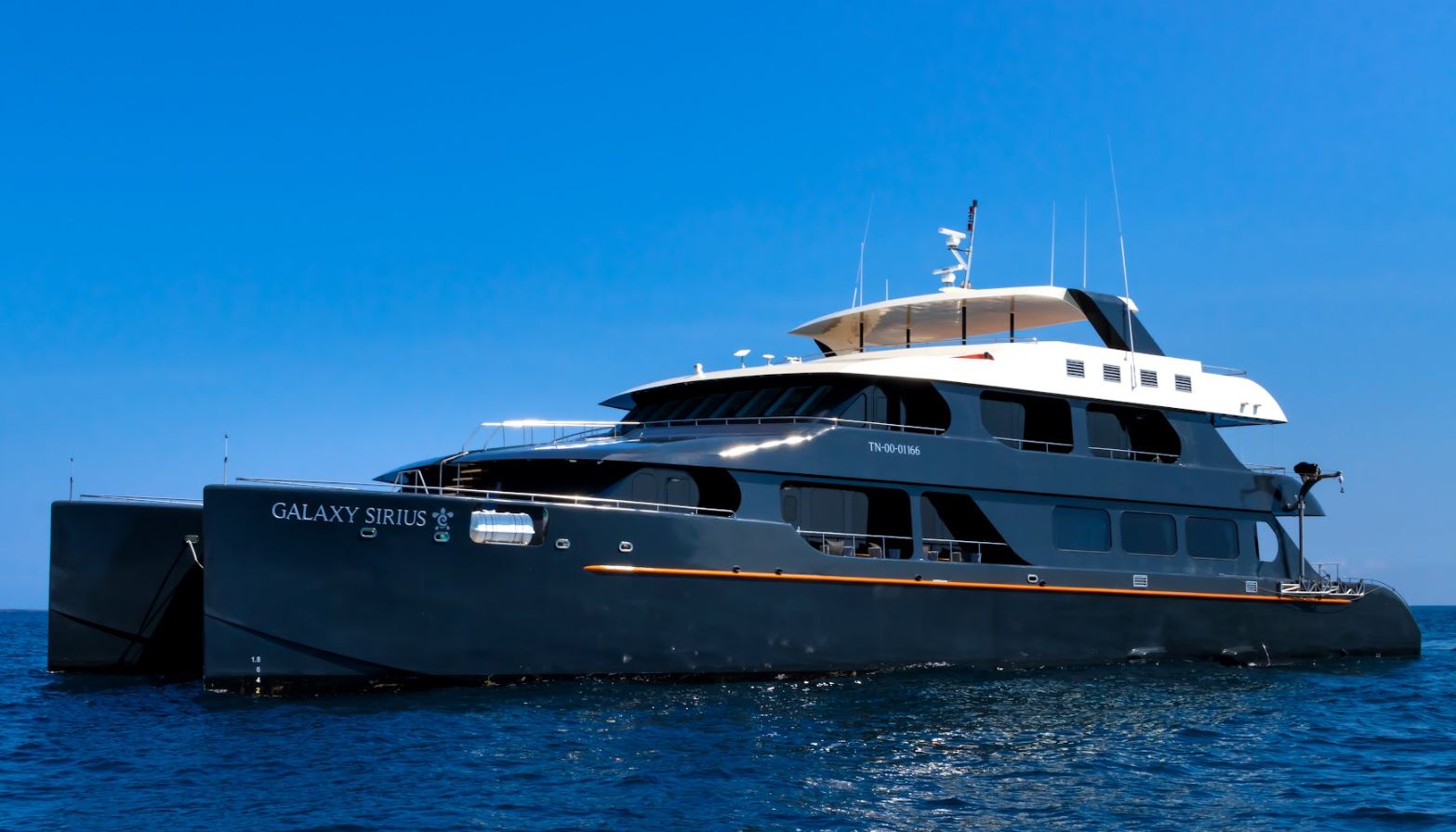
Luxurious facilities are meticulously crafted to offer unparalleled comfort and the rich experience you deserve. Whether you seek adventure or relaxation, the deluxe amenities are the perfect hub for your Galapagos Islands retreat. Immerse yourself in the comfort and extravagance aboard the Galaxy Sirius.
Highlights



Itinerary A
The Galapagos' Southeast Wonders
5 Days / 4 Nights
Visits, San Cristobal, Española, Floreana, Santa Fe, South Plazas & Santa Cruz Islands
Your adventure begins at San Cristobal’s modest yet bustling airport, where a seasoned naturalist guide will greet you. You will be transferred to the M/C Galaxy Sirius, and you will set sail. Venture to Lobos Island, a tranquil islet secluded from San Cristobal by a slim channel. This nature’s cradle, amidst a serene bay, is the playground for sea lion pups frolicking in tidal pools. Venture to Lobos Island, a tranquil islet secluded from San Cristobal by a slim channel. This nature’s cradle, amidst a serene bay, is the playground for sea lion pups frolicking in tidal pools.
You can enjoy a snorkelling adventure here, in a spot with calm waves, where you can snorkel around playful sea lions, sea turtles, and rays.
Enjoy the morning to Gardner Bay, a sparkling paradise in the archipelago with sugar-white coral sands and crystal-clear turquoise waters. The beaches here offer entertainment in the form of sun-basking and playing sea lions. As you walk along the beach you can spot the fascinating endemic fauna, from the melodious Espanola mockingbird and unique marine iguanas to the regal Galapagos hawks. You can also snorkel alongside playful sea lions, graceful reef sharks, and gliding rays, all while spotting colourful reef fish such as vivid Angelfish, Parrotfish, Damselfish and Surgeonfish colouring the underwaters landscape.
Embark on an adventure to Suarez Point, one of the Galapagos’ greatest natural wonders. Upon arrival, sea lions and marine iguanas welcome you as the first hosts of this nature spectacle. As you explore further, witness a vibrant mosaic of seabird colonies, from blue-footed and Nazca boobies to graceful frigatebirds and tropicbirds. The highlight of this journey is meeting the waved albatross, the island’s largest bird, impressing visitors with its powerful flight and intricate courtship display.
Step into the past at Post Office Bay on Floreana, where sailors established a barrel-based mail system in the 1700s, still in use today. This site also boasts a scenic beach, and incredible wildlife, including sea lions, green sea turtles, reef sharks, and, if luck is on your side, the elusive Galapagos penguin. Here, there is a snorkelling experience to explore a mesmerizing underwater world filled with sea turtles, rays, and schools of tropical fish. If lucky, catch a glimpse of a Galapagos penguin darting through the waves.
Head north to Punta Cormorant, a natural sanctuary featuring a coastal lagoon teeming with American flamingos, white-cheeked pintails, and black-necked stilts. This area is known for its white sand beach, a crucial nesting site for green sea turtles, and the recent arrival of blue-footed boobies nesting near the trail. Then, embark on an unforgettable snorkeling adventure at Devil’s Crown, an eroded volcanic crater whose currents attract a thriving marine ecosystem, including reef sharks, rays, sea turtles, and a dazzling variety of tropical fish.
Start your day with a trip to Santa Fe Island, where the towering figures of giant Prickly-pear cacti strikingly contrast the rugged landscape of lava rocks. Tucked within one of the Galapagos’ most breathtaking bays, Santa Fe’s turquoise waters, and white-sand beaches form an inviting residence for a sizable colony of sea lions you’ll find lounging about. You’ll likely encounter Darwin finches, Galapagos doves, mockingbirds, and lively lava lizards along the trail. You can also enjoy snorkelling here after your hike, with the option to kayak, across the sheltered bay. Here, you can spot sea lions, reef sharks, sea turtles, rays, and a colourful array of tropical fish.
Your afternoon destination is South Plazas, one of a twin pair of islands where the northern sibling is reserved exclusively for scientific research. Upon arriving on the tiny islet, Galapagos land iguanas will welcome you from beneath prickly-pear cacti, eagerly awaiting their fruit. Sea lions populate the island in large numbers, allowing you to observe their fascinating social dynamics, from playful pups splashing in tide pools to formidable males protecting their territories. Your trail eventually leads you to a cliff, a vantage point to observe a myriad of seabirds, including frigatebirds, red-billed tropicbirds, boobies, swallow-tailed gulls, and pelicans.
Explore the Charles Darwin Research Station, a center dedicated to wildlife conservation and research. Witness breeding programs helping restore giant tortoise populations, learn about projects tackling invasive species, and see conservationists working to protect the fragile Galapagos ecosystem.
Your Galapagos adventure comes to an end. Today, you will be transferred to Baltra Airport, where your National Park naturalist guide will assist you with final details before your flight back to mainland Ecuador.
Itinerary B
Hidden Jewels of the Western Islands
6 Days / 5 Nights
Visits Santa Cruz, Isabela, Fernandina & Santiago Islands
Welcome to Galapagos! Upon arrival at Baltra Airport, your naturalist guide will greet you and assist with the transfer to Itabaca Channel. This initial journey offers your first connection with the archipelago as you take a short ferry ride to Santa Cruz Island.
Begin your Galapagos adventure with an afternoon, scenic bus ride into the lush Santa Cruz highlands. Walk through a reserve, spotting giant tortoises, discovering endemic birds like finches and flycatchers.
Start your day exploring Moreno Point, a stunning volcanic landscape that appears barren but is brimming with life. Venture inland to discover brackish lagoons, home to flamingos, gallinules, ducks, and herons. Along the rugged coast, spot Galapagos penguins, flightless cormorants, marine iguanas, and blue-footed boobies. Sea lions and oystercatchers are also frequent visitors. You can also snorkel into the clear waters of Moreno Point and swim alongside sea turtles, cormorants, and tropical fish. If you look closely among the seaweed, you might even spot the elusive seahorse.
As the afternoon progresses, we venture into the stunning Elizabeth Bay, a peaceful sanctuary surrounded by towering mangroves and stark lava fields. This is one of the best places to spot the rare Galapagos penguin, with a total population of only about 3,000. The bay is also a nesting site for flightless cormorants, while blue-footed boobies and pelicans dive for fish.
Our journey begins at Urbina Bay, a unique Galapagos site where a dramatic geological uplift in the 1950s exposed hectares of previously submerged land. As you walk along the trail, you’ll find fossilized shells and corals, a fascinating reminder of the area’s underwater history. The region is also home to land iguanas and giant tortoises. You can also swim or snorkel into the clear waters of Urbina Bay alongside sea turtles, flightless cormorants, and penguins. The vibrant marine ecosystem is teeming with colorful fish, making for an unforgettable underwater experience.
In the afternoon, we visit the historical Tagus Cove, a site Charles Darwin once explored during his travels around the Galapagos islands. Traverse the arid Palo Santo forests, where Darwin finches and mockingbirds make their home, and take in the panoramic views of Darwin’s Lake and the towering volcanoes of northern Isabela. A boat tour along the shore offers chances to observe penguins, cormorants, marine iguanas, and the rare Galapagos martin. You can also snorkel in this area.
Espinoza Point is a true natural wonder, set at the base of the most active volcano in Galapagos. As you step ashore, you’ll be greeted by the largest colony of marine iguanas basking on black volcanic rocks. Sea lions lounge on the beach while their pups explore tide pools. You can snorkel or swim in the nutrient-rich waters of Espinoza Point that attracts fish, sea turtles, and foraging cormorants.
In the afternoon, visit Albemarle Point, where military history meets Galapagos wildlife. During WWII, the U.S. built a radar base here to monitor potential Japanese threats, and remnants of this structure remain visible today. Despite its stark, lava-covered landscape, the coastline is rich in wildlife. Some of the largest marine iguanas in the archipelago reside here, alongside Galapagos penguins, flightless cormorants, and various shorebirds, making this a fascinating blend of history and nature. You can also snorkel among the flightless cormorants, penguins, and schools of tropical fish in crystal-clear waters, experiencing the vibrant marine life of this historic Galapagos site.
Puerto Egas is a fascinating destination where history and wildlife intertwine. While there is no actual port, remnants of 1960s colonization attempts still stand. The coastal trail is teeming with marine iguanas basking in the sun and sea lions resting on the rocks. Herons, oystercatchers, and shorebirds complete this thriving ecosystem. Towards the end of the trail, the grottos are home to a small colony of the elusive Galapagos fur seal. A snorkeling session from the beach will lead you to an area of rocky bottoms, excellent for observing fish, turtles, and reef sharks.
Espumilla Beach, on Santiago’s northern coast, is a stunning one-kilometer stretch of rusty-brown sand. Surrounded by mangroves and dry forest, it hosts Galapagos hawks, finches, and mockingbirds, while flamingos and ducks may appear in the salt pan during the rainy season. Then, at Buccaneer Cove, discover a historic pirate hideout from the 17th and 18th centuries. A dinghy will take you alongside the towering cliffs, offering you a unique perspective of the stunning landscape.
Explore two remarkable sites in the Galápagos: Dragon Hill on Santa Cruz, where land iguanas roam and flamingos gather at a saltwater lagoon, and Daphne Major, home to nesting seabirds and groundbreaking finch evolution research.
Your Galapagos adventure comes to an end in the afternoon. You will be transferred to Baltra Airport, where your National Park naturalist guide will assist you with final details before your flight back to mainland Ecuador.
Itinerary C
The Winged Wonders Journey
6 Days / 5 Nights
Visits
Welcome to Galapagos! Upon arrival at Baltra Airport, your naturalist guide will greet you and assist with the transfer to Itabaca Channel. This initial journey offers your first connection with the archipelago as you take a short ferry ride to Santa Cruz Island.
Set off on a dinghy tour through Black Turtle Cove, a shallow-water haven surrounded by lush mangroves. This sanctuary is home to sea turtles, reef sharks, and various species of rays. It also serves as a crucial breeding ground for turtles and sharks. Watch herons, boobies, and pelicans hunt among schools of anchovies. Though there’s no landing, the incredible wildlife seen from the boat offers an up-close and unforgettable experience.
Rabida Island is one of the most distinctive in the archipelago, with its red sand and iron-rich volcanic formations. On the beach, a colony of sea lions basks in the sun, while a small saltwater lagoon shelters flamingos, ducks, and stilts. From Rabida’s red beach, snorkel in protected waters teeming with tropical fish, sea lions, and reef sharks. The rocky walls shelter a stunning array of marine invertebrates.
Named for its distinctive cone shape, Chinese Hat is a small islet separated from Santiago by a narrow channel, forming one of Galapagos’ most picturesque bays. Its turquoise waters, coral-sand beaches, and volcanic rocks create a stunning landscape. Snorkel into the crystal-clear waters of Chinese Hat and marvel at the vibrant colors of the fish. Spot sleek reef sharks and, if lucky, a penguin darting through the water like a swift underwater torpedo chasing anchovies.
Seymour Island is a paradise for bird watchers, with large colonies of magnificent and great frigatebirds inflating their red throat pouches in an impressive courtship display. On the ground, blue-footed boobies perform their famous mating dance, while swallow-tailed gulls perch on cliffs overlooking the sea. This area gives you the opportunity to swim alongside sea lions, sharks, turtles, rays, and tropical fish. If you’re lucky, you might spot eels hiding among the rocks in this thriving marine ecosystem.
Continue in the afternoon with a scenic bus ride into the lush Santa Cruz highlands. Walk through a reserve, spotting giant tortoises—some over 600 pounds—grazing peacefully. Discover endemic birds like finches and flycatchers.
Walking through Sullivan Bay is a fascinating journey into the volcanic origins of the Galapagos Islands. The trail crosses a vast Pahoehoe lava flow, showcasing unique textures that reveal the story of past eruptions. Along the shore, the stark landscape is brightened by the presence of penguins, pelicans, and oystercatchers, adding a vibrant contrast to the stunning volcanic scenery. After the hike, unwind with a swim or snorkeling session from a coral-sand beach or a dinghy.
Bartolome Island is one of the most iconic places in the Galapagos, renowned for its accessible penguin population and the beautiful Pinnacle Rock. The beach nearby the rock is painted with peach-colored sand, adding to the surreal beauty of the landscape. A hike to the island’s summit will offer you panoramic views of lunar-like landscapes dotted with volcanic cones, numerous islands, Sullivan Bay, and, of course, the towering Pinnacle Rock. Following the hike, you have the option to swim or snorkel from the beach. This location boasts a well-deserved reputation as one of the best snorkeling spots in the Galapagos, with its clear, calm water and diverse underwater life.
Located in the southern part of Darwin Bay on Genovesa Island, El Barranco is a wildlife sanctuary. Its fragile lava cliffs provide shelter for storm petrels and a remarkable population of short-eared owls. Along the trail, red-footed and Nazca boobies nest on the volcanic rock. Snorkel into the waters of El Barranco and explore a vibrant underwater world. Swim among colorful fish and spot sharks, rays, and playful sea lions in their natural habitat.
Darwin Bay on Genovesa Island is a breathtaking sight for birdwatchers. As you step onto the beach, you’ll be amazed by the presence of hundreds of boobies, gulls, and frigatebirds soaring, nesting in bushes, or resting on the sand. Along the shore, sea lions and marine iguanas blend into the scenery, while inland you may spot night herons, swallow-tailed gulls, Darwin finches, Galapagos doves, and mockingbirds. Darwin Bay offers incredible snorkeling spots, from deep waters along the cliffs to shallow areas near the beach. No matter where you dive, a vibrant underwater world awaits, filled with colorful fish and high chances of spotting sharks, rays, and playful sea lions.
The San Cristobal Interpretation Center provides an immersive journey through the natural and cultural history of the Galapagos. Interactive exhibits showcase the islands’ evolution, human impact, and ongoing conservation challenges. From early explorers to modern ecological restoration efforts, this center offers a comprehensive view of the past, present, and future of the archipelago.
After exploring the breathtaking biodiversity and unique landscapes of the Galapagos, it’s time to return to mainland Ecuador. You’ll be transferred to the airport, bringing this unforgettable journey to a close.
Tour Inclusions
- Airport assistance on the cruise departure dates
- Transportation and fuel surcharge in the Marine reserve of Galapagos
- Bilingual naturalist guide (English-Spanish)
- 2 Bilingual naturalist guide (English-Spanish) on M/C Galaxy Sirius
- All meals during the cruise, from lunch on the first day to breakfast on the last day
- Personalized crew service
- One snack after each activity (except last day)
- Unlimited purified water, coffee and tea
- All visits, excursions & activities according to the itinerary
- Private Transportation Airport-Channel/ Channel-Airport
- Snorkeling gear (Mask, tube, and fins), use of kayaks and paddle boards in authorized places, and wetsuits
- Beach towels
Tour Exclusions
- International flights to/from Ecuador
- Galapagos Islands airfare from/to mainland (Quito or Guayaquil)
- Galapagos National Park entrance fee (USD $200 per person)
- Transit Control Card (USD $20 per person)
- Alcoholic and soft drinks
- Tips and gratuities
- Personal expenses
- Travel insurance (Highly recommended)
Image Gallery