Tour Overview
Highlights


Itinerary A
7 Days / 6 Nights
Tuesday - Monday
Visiting Baltra, Isabela Island, Santiago and Santa Cruz Islands
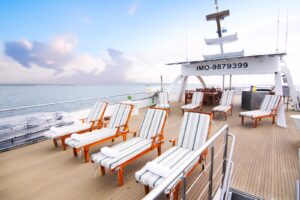
Arrive on the Galapagos Islands at Baltra Airport and be met by a guide, who will collect your luggage and escort you on a short bus ride to the harbour to board the yacht Solaris.
In the afternoon, continue to Las Bachas beaches on Santa Cruz Island, two small beaches located to the west of Black Turtle Cove, in Santa Cruz. Its sand consists of decomposed corals, which makes it white and soft. This makes it a favourite nesting site for sea turtles. Behind one of the beaches there are small lagoons, where flamingos and other shore birds, such as Galapagos gulls and lapwings, can be seen from time to time.
In the morning, you will embark on an excursion to the Whitetip Reef Shark Channel, a set of several small islets off the coast of Puerto Villamil. From a viewpoint, there is an easily admired scene of endemic Galapagos wildlife. You can spot herons on mangrove branches whilst Galapagos penguins and sea lions can be spotted on the land. The tidal channels are the perfect home for Whitetip Reef Sharks, who live here in abundance.
After lunch aboard the yacht, you can visit the local tortoise breeding centre to see Giant Galapagos Tortoises of all sizes. This project, just outside of Puerto Villamil, was created to rescue the endangered populations of Isabela’s southernmost volcanoes. You might also have the chance to see American flamingos. In the afternoon, you will have some free time to explore the village and its beach.
The morning takes you to Moreno Point on Isabela Island. Located on the north coast of the island between the volcanos Sierra Negra and Cerro Azul, the trail runs along a solidified pahoehoe lava flow into a complex of coastal lagoons. Here, you can spot the diverse range of birds found around the lakes and mangrove forests.
After lunch aboard, you will enter the Bolivar Channel, navigating towards Tagus Cove. A tour along the volcanic cliffs in a dinghy will give you a good chance to see the Galapagos penguin, the flightless cormorant and other sea birds. From the landing dock, it is about a 30-minute hike along the trail up to the top of the cliffs to give you the opportunity to view Darwin Lake; an uplifted ultra saline lake saltier than the ocean. You can also spot a number of volcanoes from this location.
Fernandina is the third largest island in the archipelago and has a single visitor site: Punta Espinoza located at the nor theastern tip of the island. Marine iguanas conglomerate in larger groups than in any other island. They bask around in the sand, swim near the shore and sometime block the way at the landing dock.
Whilst having lunch, the yacht will cross the Bolivar Channel for the final time to visit Vicente Roca Point. The calmer waters of the coves in the area are well protected against the ocean swell and are a fairly cold but great place for snorkelling amongst various species of shark, penguins, pufferfish, and even seahorses.
In the morning, you will visit Espumilla Beach, a site at the norhtern end of James Bay, on the western coast of Santiago. This beach has been revived as an important breeding site for turtles, as it is no longer ravaged by digging wild pigs. The turtles return year after year to burrow their eggs. During the climb of a hill, you will be rewarded with a beautiful overview of the transitions from sea into beach into mangrove into dry palo santo forest.
In the afternoon you will head to Puerto Egas, a black beach is located at the west side of Santiago Island. This site is called Puerto Egas, because there was an attempt of company of Hector Egas, to start the exploitation of salt, which failed because the price of salt on the continent was very cheap, and did not justify its exploitation in Galapagos.
After a wet landing on the remarkable red beach of Rábida, there are two short guided walks. Iron oxide particles give rocks and sand their reddish color. The beach wall has a shallow lagoon fringed with green; This oasis is the most fertile spot on the otherwise barren islet, which is covered in palo santo trees. The salty lagoon attracts all kinds of waterfowl, including pintails and sometimes red flamingos. Many species of songbirds hide and breed among the evergreen foliage of the surrounding mangroves. One of the most outstanding attractions is the important breeding colony of brown pelicans, the only pelicans in the world that dive.
The dinghies will take you to the tourist pier of Puerto Ayora for your transfer to the Charles Darwin Research Station and headquarters of the Galapagos National Park Service. Here, you will be taken on an education stroll learning about the success of the breeding centre and the enclosure of the Galapagos Giant Tortoises.
Afternoon transfer to Baltra airport for your flight back to Guayaquil or Quito.
Itinerary B
5 Days / 4 Nights
Monday - Friday
Santa Cruz Islands, Genovesa, Santa Fe, San Cristobal Island.
Arrive on the Galapagos Islands at Baltra Airport and be met by a guide, who will collect your luggage and escort you on a short bus ride to the harbour to board the yacht Solaris.
Continue onwards in the afternoon to the Santa Cruz highlands, namely the native scalesia forest of El Chato Tortoise Reserve. Here you can observe Galapagos Giant Tortoises in their most authentic setting. The Twin Craters are found on either side of the road leading to Puerto Ayora. The craters lie within a lush scalesia cloud forest, a high-altitude plant species that are endemic to the Galapagos. This area is also home to the carpenter finch, which uses tools to search for food. There may also be opportunities to see the vermillion flycatcher, a small red-breasted bird.
Seymour is a flat, boulder-strewn island, allowing for great nesting sites for native birds. Here, you can spot a large population of magnificent frigate birds and blue-footed boobies. The tremendous waves that pound against the shores of the island allow for you to spot bodysurfing sea lions playing among the surf.
Afternoon visit to the beautiful white coral sand beaches of Mosquera Islet. During a beach walk, you can observe numerous species of waders and sanderlings. If you are lucky, you may even encounter yellow-crowned night-herons or even a red-footed booby.
Inside the submerged caldera of Genovesa lies Darwin Bay. This stunning bay, with its shores painted by coral sand beach and lava formations grants you an amazing opportunity to spot a diverse range of fauna, such as whimbrels, tattlers, Galapagos sea lions, frigatebirds and red-footed boobies among the mangroves. You can also spot the yellow warbler, Darwin’s finches, and the Galapagos Mockingbird.
Afternoon excursion to Prince Phillip’s Steps, landing at the feet of the steps after a dinghy ride along the eastern arm of the Genovesa caldera. A hike up the steps that climb up the sheer 25m/80ft high cliffs follows, up to the top. From the top, you can enjoy panoramic views, a strong sea breeze and the ability to observe the amazing flying skills of the seabirds.
In the afternoon, you will explore the South Plaza Islet. There is a sea lion bull who calls the jetty home, who could delay your landing with his welcoming barking. This islet’s bright red flora and giant Opuntia Cacti that cover the landscape of the island provides food and shelter to thousands of endemic marine and Barrington iguanas. You will also have the opportunity to swim over a reef of boulders that sea turtles, reef sharks, stringrays, and sea lions call home.
Witch Hill (Cerro Brujo in Spanish) is a tranquil bay with a coral sand beach. Snorkelling here shows the rich habitat that marine iguanas, stingrays, white-tipped sharks, eagle rays, turtles, morays, garden reels, and dozens of reef fish, call home. Behind the bay is a dry dark lava flow with sandy ponds that serve as a refreshment point for iguanas, as well as a strategic place to observe coastal and migratory birds including pelicans, blue-footed boobies, and swallow-tailed gulls.
Afternoon transfer to Baltra airport for your flight back to Guayaquil or Quito.
Itinerary C
5 Days / 4 Nights
Friday - Tuesday
Visits San Cristobal Island, Bartholomew and Santa Cruz Island.
Upon arrival on San Cristobal island, you will be met by a guide, who will receive your luggage and escort you via short bus ride to the harbour.
Afternoon excursion to Colorado Hill, on San Cristobal island. Here you will visit the Colorado Hill Tortoises Protection and Growing Center in the south-east of the island. The center includes a large corral, a Visitors center, breeding center and an interpretative trail. Along this trail is possible to see different species of native and endemic plants as well birds as the San Cristobal Mockingbird, Yellow Warblers, and many species of finches and the Galapagos flycatcher.
Morning excursion to Gardner Bay on Espanola Island, a wonderful place to cool off in the turquoise water and admire the myriad of colourful reef fish. You will also have the opportunity to snorkel with turtles or enjoy the proximity of playful sea lions. The white-sand beach is also an important breeding ground for green turtles, and its main attraction is the colony of Galapagos sea lions.
In the afternoon, continue to Suarez Point, also on Espanola, is home to some of the most impressive and diverse seabirds in the archipelago. Blue-footed boobies, Nazca boobies, Galapagos gulls, and red-billed tropicbirds are also native to this island. Along the southern coast, huge ocean waves crash against basalt cliffs, forming a spectacular blowhole where water sprays meters high into the air with spectacular views of soaring birds.
Morning visit to Cormorant Point and Champions Islet off the coast of Floreana island. At the landing beach, you will be welcomed by a small Galapagos sea lion colony. The green sands of the beach contains a high percentage of glassy olivine crystals that have been blown out of the surrounding tuff cones. The “flour sand” beach on the southern side of the peninsula is made up of an extremely fine white coral sand that feels very smooth on the feet.
Afternoon excursion to Post Office Bay and Baroness Lookout on Floreana Island. Historically, this site is the location of a wooden barrel that was placed in the 18th century by the crew of a whaling ship. The letters found inside the barrel would be picked up and delivered by sailors returning home. There was no postage fee, and, surprisingly, this mailbox and its honor system are still in use today. It is said that Baroness Eloisa von Wagner loved this place and spent several hours watching the horizon. Within walking distance (30 m) are the ruins of what is known as her house. You can also relax on the beach, where you might spot not only Galapagos sea lions, green turtles, and golden rays, but also Galapagos penguins. This is the only place in the southeastern archipelago where penguins reside.
In the morning, enjoy an excursion to Sullivan Bay on Santiago Island. This bay, at first glance, looks like a moon landing, with rocky shores and empty fields. However, this area is extremely popular among photographers, due to the diverse fauna, where you can spot green sea turtles burrowing in the white sand beach, where you can also spot crabs, blue herons, and oystercatchers.
Continue in the afternoon to Bartholomew Island. Here, you can climb the Bartolome peak trail to see the stunning panoramic views over volcanic peaks, lunar craters, and lava fields. Afterwards, you can enjoy a snorkelling adventure of the famous “Pinnacle Rock”. At Bartholomew, you might spot a nearby colony of Galapagos penguins, as well as sea turtles living in the two stunning white-sand beaches.
This morning takes you to Las Bachas beaches on Santa Cruz Island, two small beaches are located to the west of Black Turtle Cove, in Santa Cruz. Its sand consists of decomposed corals, which makes it white and soft. This makes it a favorite nesting site for sea turtles. Behind one of the beaches there are small lagoons, where flamingos and other shore birds, such as Galapagos gulls and lapwings, can be seen from time to time.
Afternoon transfer to Baltra airport for your flight back to Guayaquil or Quito.
Tour Inclusions
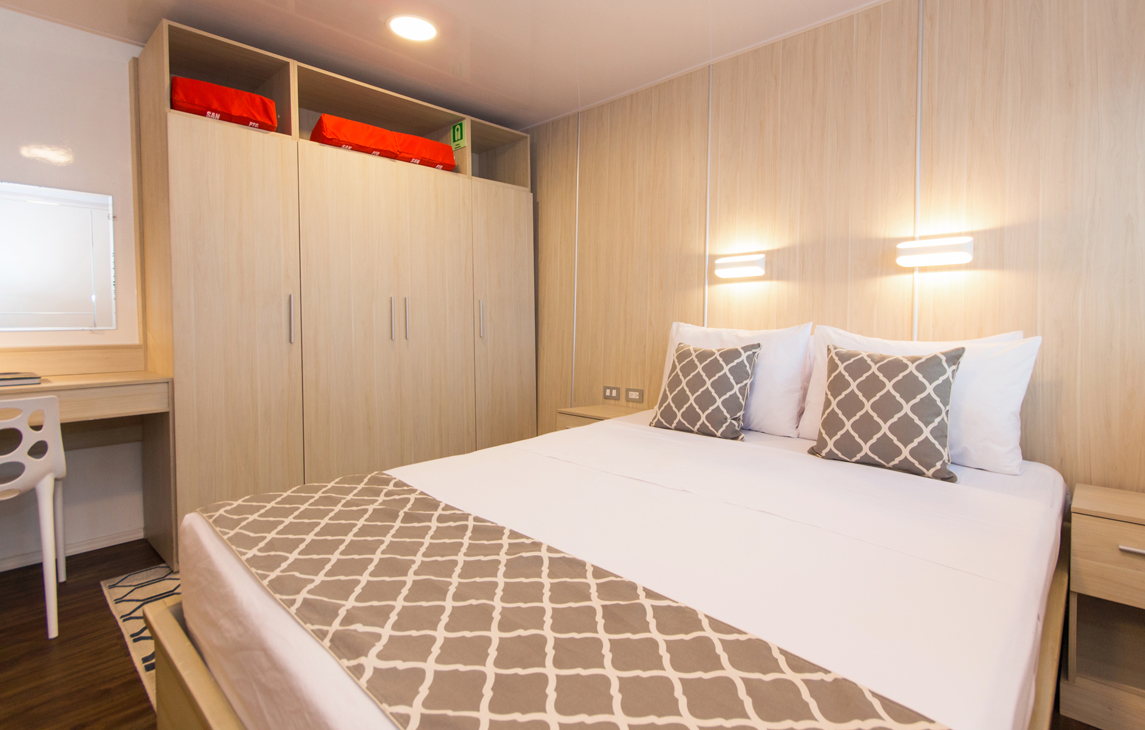
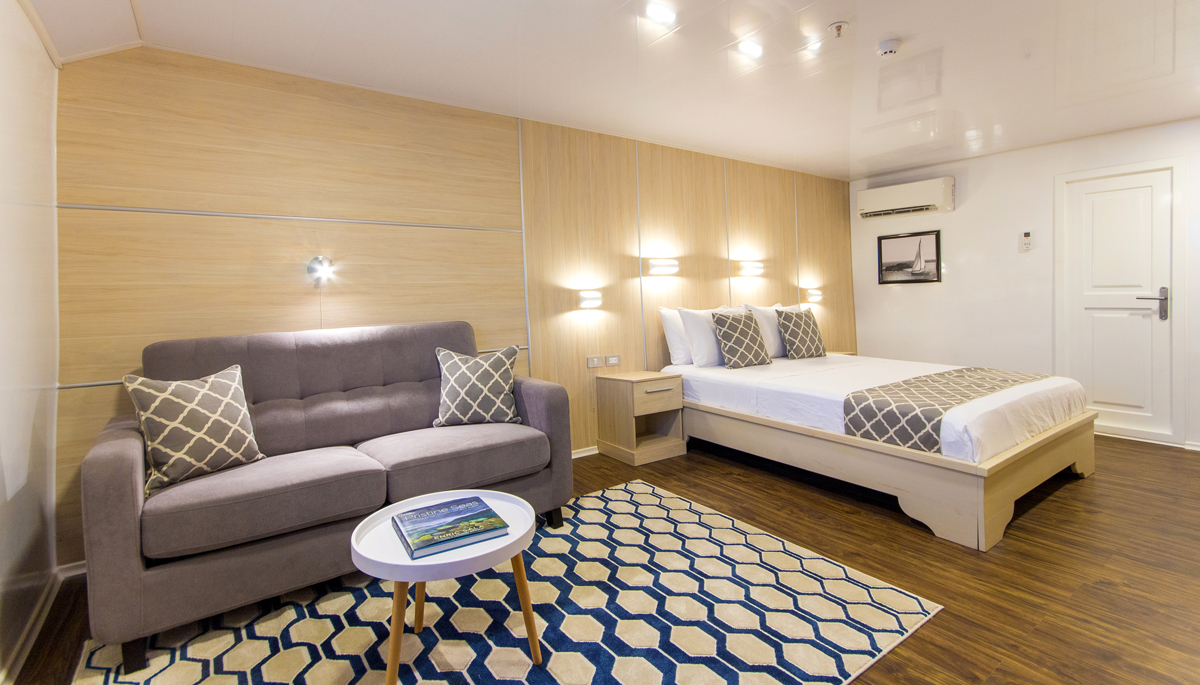
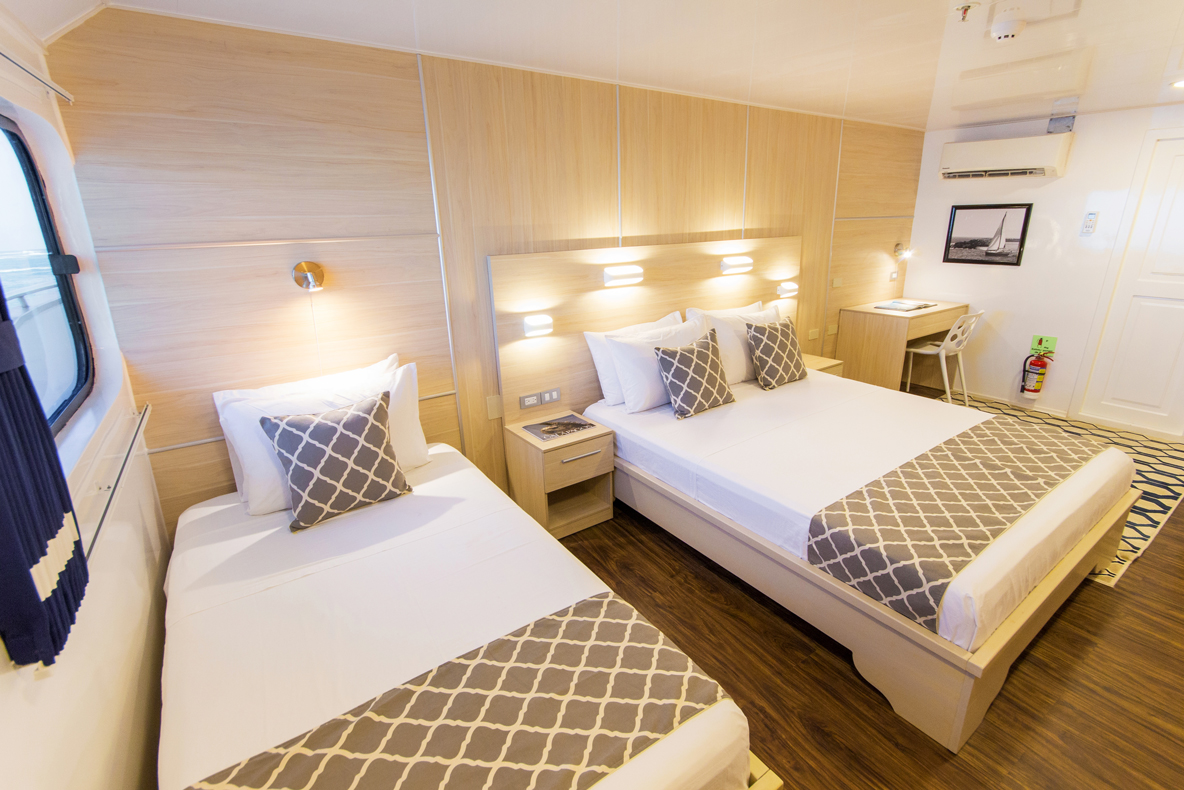
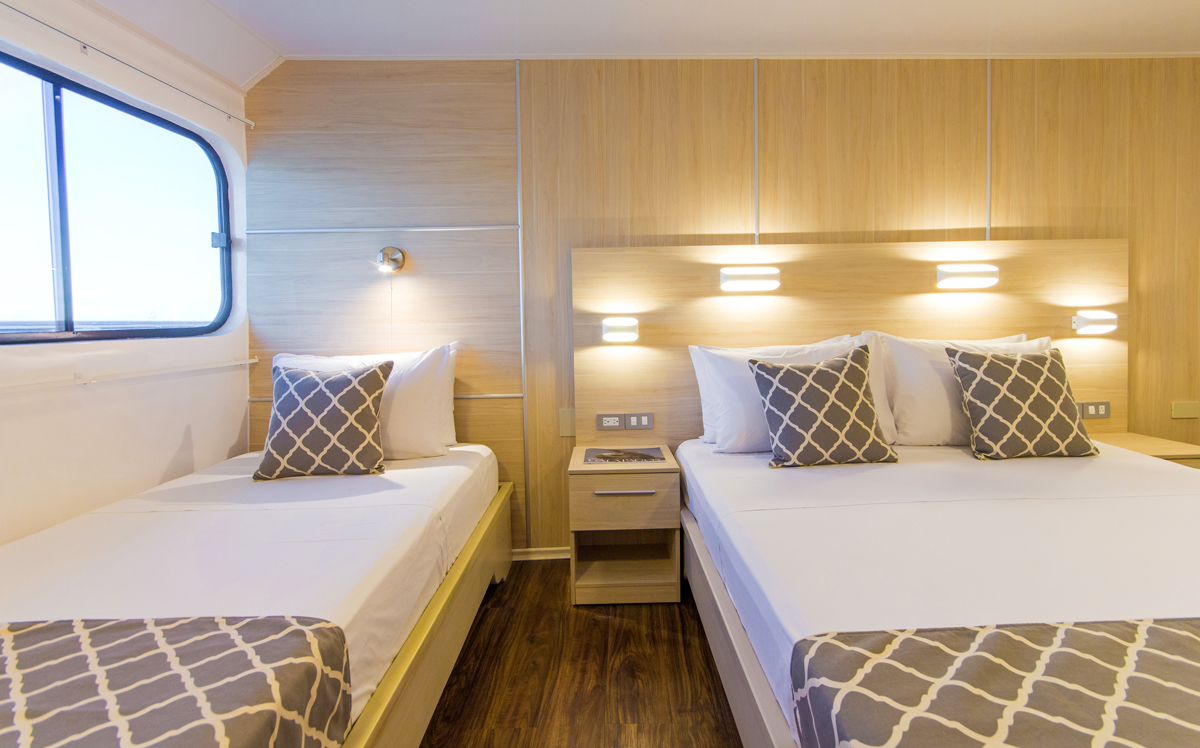
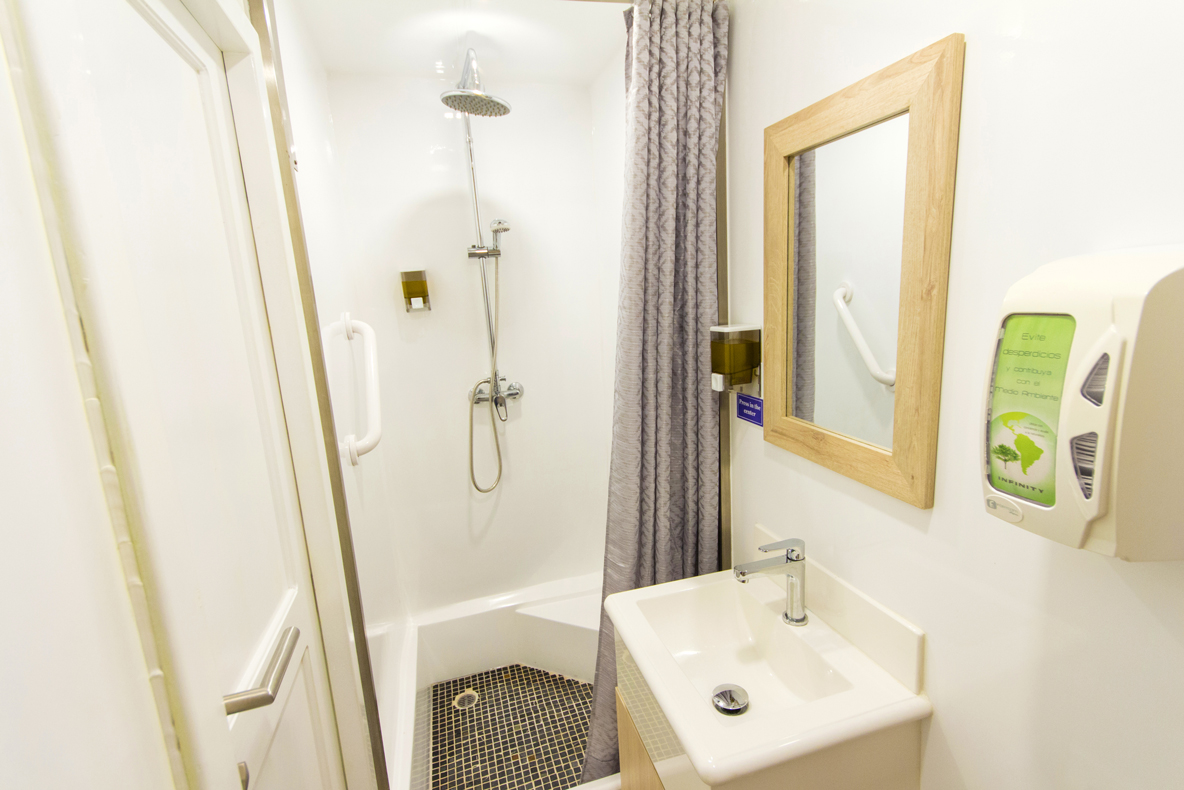
- Lodging onboard in private facilities
- Three meals per full-day; unlimited water, coffee and tea
- All excursions as mentioned in the itinerary
- English speaking naturalist guide
- Use of kayaks (if applicable)
- Snorkelling gear
- Airport-yacht-airport transfers (only guaranteed if passengers arrive at the scheduled meeting point, date and time)
Tour Exclusions
- Roundtrip flight to Galapagos Islands from mainland Ecuador
- Galapagos National Park entrance fee (USD 200 pp, subject to change)
- Transit Control Card (USD 20 pp, subject to change)
- Soft and alcoholic drinks
- Wetsuit or other rental equipment
- Gratuities, tips and other items of personal nature
- Travel insurance (mandatory)
Image Gallery