Cruise Overview
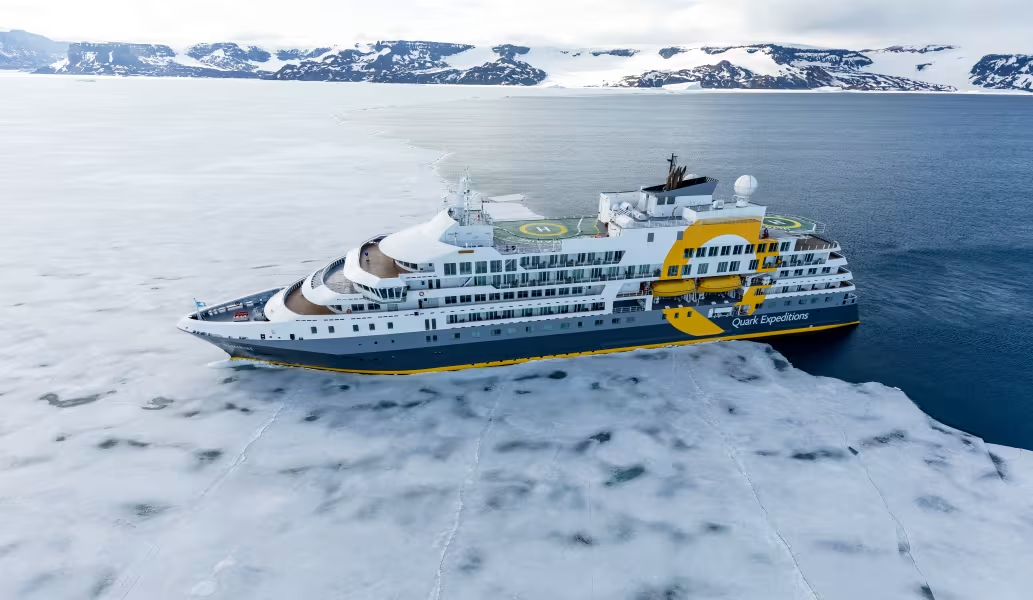
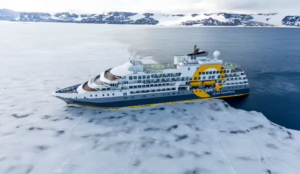
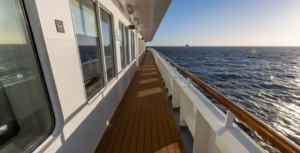
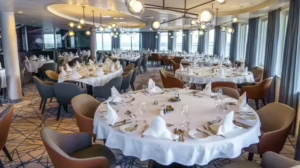
Ultramarine is designed to go beyond the familiar in polar exploration, to discover new places, and to immerse you in the best the region has to offer. Equipped with two twin-engine helicopters, Ultramarine offers the most robust portfolio of adventure activities in the industry, the most spacious suites in its category, breathtaking public spaces, and more outdoor wildlife viewing spaces than other expedition ships its size. It also features an innovative mix of sustainability features that exceed all industry standards. With all this and more, Ultramarine is set to deliver the ultimate polar expedition experience. The ship can hold up to 199 guests, and is staffed by 140 professional crew.
Highlights

Antarctica By Helicopter: Icebergs, Mountains and Remote Lands
Antarctic Explorer: Discovering the 7th Continent
You will begin your journey in Ushuaia, a small but bustling port town at the tip of South America. This Argentine town is an ideal gateway for you to explore the southern extent of Patagonia while preparing for your adventure ahead. Enjoy the mountains or sample handcrafted chocolate at a café in town.
Embarkation will occur in the late afternoon, after which your vessel will sail down the historic Beagle Channel, which transects the Tierra del Fuego archipelago in the extreme south of South America. Expect an air of anticipation as you depart—the next time you see land, you’ll be on the world’s most southern continent!
The most common reaction upon reaching the 7th Continent is a sense of reverence and awe. The experience is beyond words, since few places are as untouched and enduring as Antarctica. You will begin to appreciate why this region has long captivated the attention of explorers and travelers alike. Every time we visit Antarctica, we witness something new or unexpected, which means that your expedition will be unlike any other—creating a unique, personal experience.
Each day, you will take Zodiac excursions from the ship to explore glaciated bays, channels and landing sites. Your Expedition Team will take care of you at each landing, whether you are hiking the Antarctic landscape, visiting a research station or consorting with chinstrap, Adélie and gentoo penguins, all of which can be found here. Keep an eye out for Weddell, fur, crabeater and leopard seals as well as curious whales, such as humpbacks, minkes, or perhaps orcas while on a Zodiac cruise. Each excursion will present a new array of creatures to fascinate you and keep your camera busy.
The journey back across the Drake Passage provides final opportunities to enjoy the crisp Antarctic air Spend time on the deck, watching for seabirds and scouting for whales, enjoy presentations by your Expedition Team and celebrate the experiences shared exploring Antarctica.
The journey back across the Drake Passage provides final opportunities to enjoy the crisp Antarctic air Spend time on the deck, watching for seabirds and scouting for whales, enjoy presentations by your Expedition Team and celebrate the experiences shared exploring Antarctica.
Emperor Penguin Quest: Expedition to Snow Hill
After an early breakfast at the hotel, your group will transfer to the airport and board our private charter flight to Ushuaia, Argentina. Upon arrival, you will be transferred from the airport to a central downtown location to enjoy time on your own to explore quaint Ushuaia—the world’s southernmost city—before making your way to the pier. After a late afternoon embarkation, you will sail along the historic Beagle Channel, which transects the Tierra del Fuego archipelago in the extreme south of South America. Enjoy the air of anticipation as you depart—the next land you see will be the Antarctic!
The unpredictable and exciting Drake Passage, which lies at the confluence of the Pacific, the Atlantic and the Southern oceans, is an adventure unto itself. While being well taken care of by our expert onboard staff and expedition team, you’ll have plenty of time to gaze out at the expansive ocean waters, photograph seabirds as they swoop around the ship, and get to know your Expedition Team and fellow travelers.
The journey toward Snow Hill Island will put you in explorer mode as the captain and Expedition Leader keep you updated through weather briefings, meteorological and sea ice condition reports. The thickness of ice will determine how close Ultramarine can get to Snow Hill Island, then our twin-engine helicopters will take over.
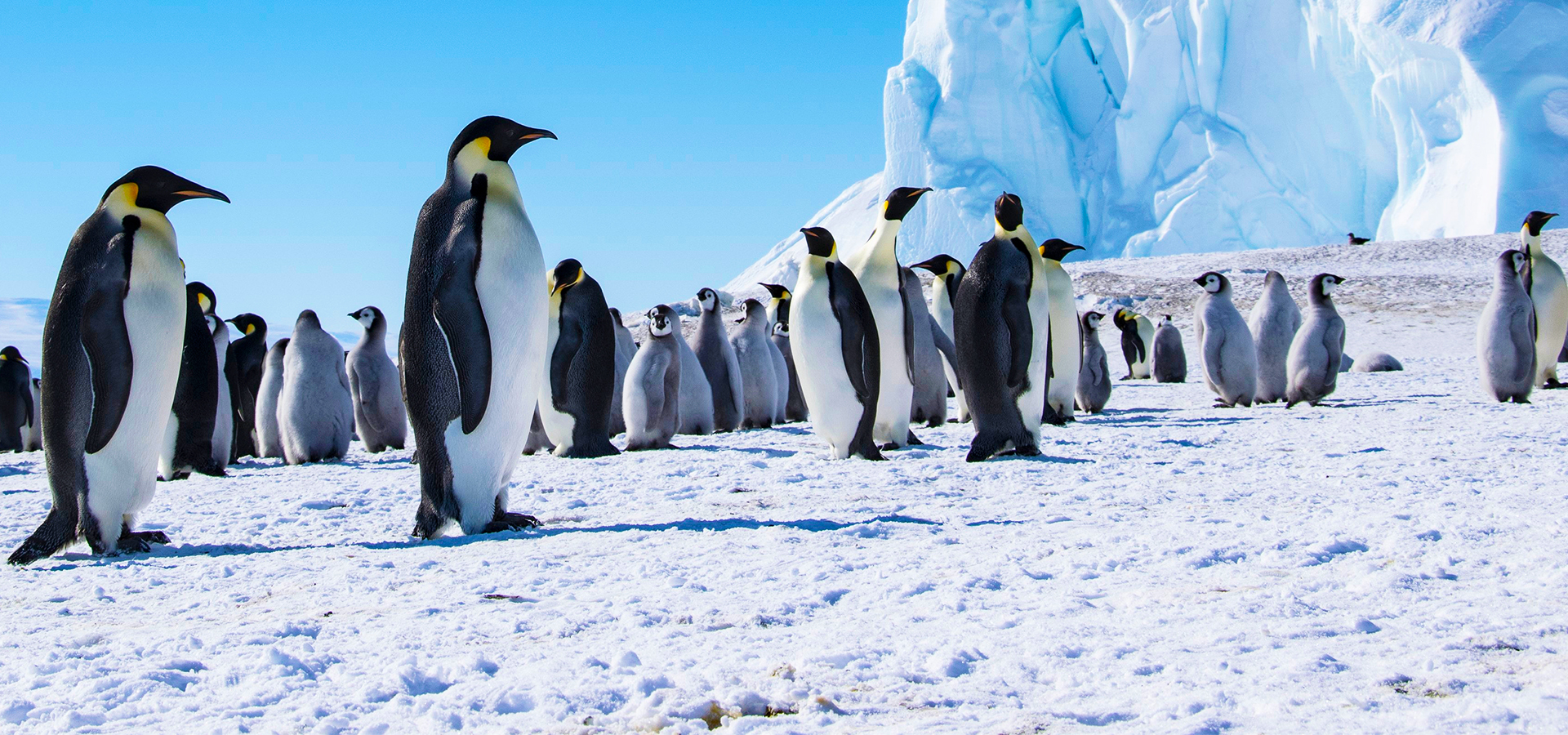
Like summitting a mountain from base camp, parties will set out from Ultramarine towards the emperor penguin colony. Their adventure begins with an extended helicopter transfer that will reveal a landscape of snow-capped peaks and apartment-building-sized tabular icebergs. The rookery itself is located on the sea ice off the south coast of Snow Hill Island and the landing will be as close to the penguins as possible, yet at a safe distance to avoid disturbing the birds. Upon landing, your party will walk across the ice to the fabled emperor penguin colony. The wind. The ice beneath your feet. Walking next to paths in the snow carved by penguins that came before. And then there are the incredible sounds of the penguins in the distance as you march toward one of the rarest wildlife opportunities on the planet: the colony of thousands and thousands of rarely-seen emperor penguins.
The goal of the expedition is to get every guest to the remote rookery once. The Expedition Team and special experts will be close by to answer your questions and ensure you take in everything there is to see. You’ll observe close up how the emperor penguins behave as a tight-knit community, how they care for their young, and how they body surf across the ice in a way that can only be described as quirky yet efficient. The helicopter expedition in search of the emperor colony might just be the adventure of a lifetime. And while at base on Ultramarine with your attentive Expedition Team, you’ll be immersed each day in the polar experience of the Weddell Sea.
Daily activities will include Zodiac cruising among the icebergs, adventuring and learning while atop the ice, paddle-on-top kayaking, or working with our team to observe the weather forecasting and ship operations up close. A particularly enriching component of your voyage will be the bespoke educational programs tailored specifically for this expedition that offer both traditional (lecture format) and hands-on opportunities for learning about this fascinating region. Each day our polar experts, who include penguin scientists, biologists and polar historians, will present on various aspects of emperor penguins and their behaviors, ice formations such as the tabular icebergs which you’ll see from the deck of your ship, and the experiences of polar explorers who braved the Weddell Sea over a century ago. Or you might, on one of these days, decide to take the polar plunge, or test your balance on a stand-up paddleboard. Then again, maybe you’ll enjoy a little pampering. If so, you can choose from Ultramarine’s excellent onboard amenities, including the spa, sauna and fitness room.
The emperor penguin colony at Snow Hill is the goal of this expedition. However, if weather or ice conditions prevent us from visiting the colony or shorten the duration of our visit, we may explore some of these other sites. Your possible landings in Antarctica will take place on the eastern side of the Peninsula, which is an extension of the Transantarctic Mountains and is the most northern stretch of Antarctic land.
Brown Bluff
An immense cliff of volcanic rock, towers 2,225 feet (678 meters) over rookeries of Adélie and gentoo penguins, some of which will be incubating their eggs.
Devil Island
The Swedish Antarctic Expedition of 1901-04 discovered the narrow island, which is 1 mile (1.6 km) long and has a low summit at each end.
Hope Bay
Three members of the Swedish Antarctic Expedition (1901-04) spent the winter in a hut on the shores of Hope Bay. The hut is located close to the jetty of Esperanza Station, an Argentine research station.
Paulet Island
Located in the northwestern Weddell Sea, Paulet Island is home to a large Adélie penguin rookery. With a volcanic cone that rises 1,158 feet (353 meters), the island reminds you that this was once a very active landscape. In addition to penguins, you may be interested in visiting a historic hut built by members of the Swedish Antarctic Expedition of 1901-04. A cross marks the gravesite of crew member Ole Wennersgaard.
Seymour Island
Northeast of Snow Hill Island is a smaller island that was originally mistaken for a cape. Seymour Island is significant for fossil finds and for the remains of the KT Boundary, which marks the transition between the Cretaceous Period (dinosaurs and reptiles) and the Tertiary Period (mammals) of geological times. This era is known for the mass extinction of many forms of life, including dinosaurs.
The journey back across the Drake Passage provides a final opportunity to enjoy the invigorating Southern Ocean air. Spend time on the deck watching for seabirds and scouting for whales, enjoy presentations by your Expedition Team, and celebrate the experiences you’ve shared getting off the beaten track in the remarkable world of Antarctica.
The journey back across the Drake Passage provides a final opportunity to enjoy the invigorating Southern Ocean air. Spend time on the deck watching for seabirds and scouting for whales, enjoy presentations by your Expedition Team, and celebrate the experiences you’ve shared getting off the beaten track in the remarkable world of Antarctica.
The journey back across the Drake Passage provides a final opportunity to enjoy the invigorating Southern Ocean air. Spend time on the deck watching for seabirds and scouting for whales, enjoy presentations by your Expedition Team, and celebrate the experiences you’ve shared getting off the beaten track in the remarkable world of Antarctica.
Falkland Islands and South Georgia: 20-Day Wildlife Adventure
Following breakfast at our hotel, we will transfer to the airport for our charter flight to Puerto Madryn, in the Patagonian province of Chubut on Argentina’s stunning Atlantic coast. Upon arrival in Puerto Madryn, your checked bags will be transferred directly to your cabin on Ultramarine, leaving you free to explore this lively Patagonian port town. As you stroll the shoreline, you may spot sea lions basking on the beach or catch sight of southern right whales offshore. Visit the local cafés and artisan markets for a taste of the region’s Welsh-Argentine heritage. In the afternoon, we’ll gather for the group transfer to the port to board Ultramarine. After check-in, you’ll be shown to your comfortable cabin— your home for the next 18 nights. Once you’ve settled in, your warm and friendly Expedition Team will introduce themselves and the ship, sharing important details about the voyage ahead. Expect an air of excitement as we set off toward the wildlife-rich subAntarctic islands of the Falkland Islands and South Georgia.
From Puerto Madryn we set our course for Islas Malvinas, also known as the Falkland Islands, where we aim to dedicate at least three days to exploration. En route, we will transit rich waters that support an array of wildlife, and in these latitudes—between 42 and 51 degrees north—you may spot avian and marine species you might not see further south. Be sure to spend time on the outer decks taking in the open water, and keep your binoculars handy for any wildlife sightings. Your Expedition Team will host expert presentations about the Patagonian coastlines and the isolated wildlife hotspots of the Falklands and South Georgia. Time at sea also provides opportunities to slow down and relax, and spend time getting to know your fellow ship mates who have traveled from diverse countries around the globe—and who share your passion for wildlife and adventure. It’s not uncommon for guests to make lifelong friends. As we near the Falkland Islands (also known as Islas Malvinas) sometime in the evening of our second day at sea, you may notice an increase in seabirds, particularly albatrosses.
We’ll set course for the farthest—and rarely visited— northwest islands in the archipelago. Some of these islands are annual nesting sites for tens of thousands of birds, including the black-browed albatross. While many eyes may be trained toward the horizon and above in search of birds, stay alert to signs of movement above and beneath the surface of the water. Peale’s, Commerson’s, and dusky dolphins can be seen here, along with the occasional baleen and long-finned pilot whale.
With extended time in the Falklands, we’ll seek opportunities to visit seldom explored sites renowned for birdlife and beauty. Our destinations will depend entirely on weather and marine forecasts, as the outer Falklands are exposed to oceanic swells. We’ll choose locations that offer the best—and safest—conditions for exploration. One such site is the small, slender Steeple Jason, one of the most northwesterly islands in the Falklands. Difficult to access, it has been featured in numerous wildlife documentaries for its prolific black-browed albatross colony—the largest in the world, with an estimated 100,000 to 180,000 breeding pairs. It’s truly a sight to behold. Their closely packed nests stretch for hundreds of meters along the shoreline, just beyond dense tussock grasses. Looking west to sea, you’ll likely see albatross riding the wind. The walk to the colony crosses uneven terrain and impressive tussock grass, which provides critical habitat for many other bird species. These vivid green grasses, rooted in rocky soil, create a striking contrast with the sharp ridgeline in the background. Largely untouched by humans, Steeple Jason is home to a small shepherd’s outpost and a research field station— overshadowed by vast wilderness. Steeple Jason offers a rare chance to feel truly remote amid a vast ecosystem alive with countless animals. Our explorations may also take us to New Island, just over thirty nautical miles south of Steeple Jason.
A paradise for birders, this small island boasts coves with white sandy beaches sheltered from the open ocean, and is considered one of the most beautiful in the Falklands. Around 25,000 to 30,000 black-browed albatross nest here, joined by Magellanic, gentoo, and southern rockhopper penguins—each with its own distinct nesting style. Other common sightings include songbirds and the formidable striated caracara. Dolphins, including those in shallow waters, are frequently seen in the area, adding to the island’s remarkable wildlife encounters. Other wilderness destinations may include bird-rich West Point and Saunders Islands in the western Falklands. Saunders Island will amaze you with its long white-sand beaches, the northern shore stretching for kilometers and facing the open sea. It’s almost surreal—particularly if you’ve encountered penguins in ice-and snowladen Antarctica on previous voyages— to watch gentoo, Magellanic, and southern rockhopper penguins making their way to the water along sandy stretches. There’s also a smaller colony of black-browed albatross nests on a nearby cliff, sharing the gently sloped, grassy island with grazing sheep tended by the warm-hearted Saunders family.
Look for Commerson’s dolphins, often spotted in the shallow waters near Saunders’ sandy beaches. West Point Island is another Falkland gem, with vibrant green vegetation and blooming spring flowers. From the rocky beach, a gentle walk (with slight elevation) leads through a picturesque meadow to a cliff where black-browed albatross nest. West Point Island is home to 2,000 breeding pairs. We’ll visit a small section of the colony for intimate views of albatross in their nests and soaring above the waters. The walk passes through grassy fields dotted with wildflowers, blending the domestic with the wild. Energetic hikers may tackle Mt. Ararat for sweeping views, while others can travel by 4X4 to the colony and overlooks. Peale’s dolphins, Falkland steamer ducks, and striated caracara are often seen here. Carcass is another excellent destination. Like Saunders and New islands, Carcass boasts stunning white-sand beaches meeting the cold, blue waters of the South Atlantic. Magellanic and gentoo penguins nest here, and the tussock grasses are especially impressive. Look overhead for peregrine falcons soaring high above. No visit to the Falklands is complete without a stop in its largest community— Stanley. Highlights include the museum (admission covered) and the striking arch monument built from the jaws of blue whales. Pop into a local restaurant or traditional British pub for Falkland f ish and chips, or a pint while chatting with locals about life on this windswept sub-Antarctic island. Stanley has a distinct boundary—where residential streets end and open wilderness and sheep meadows begin to stretch into the horizon. We’ll set sail in early afternoon, allowing plenty of time to cover the 700+ nautical miles to our next destination: South Georgia.
Below the Convergence, the water is much colder; where it meets the warmer Atlantic, cloudy or foggy conditions often form. This mixing of currents creates an ideal foraging ground for a variety of birds and marine mammals. We’ll likely be accompanied by albatross, petrels, and shearwaters, and may spot whales—some species more often than others. Far from shore, we might see Antarctic fur seals. Seeing prions (part of the petrel family) and shags in greater numbers indicates we’re approaching South Georgia.
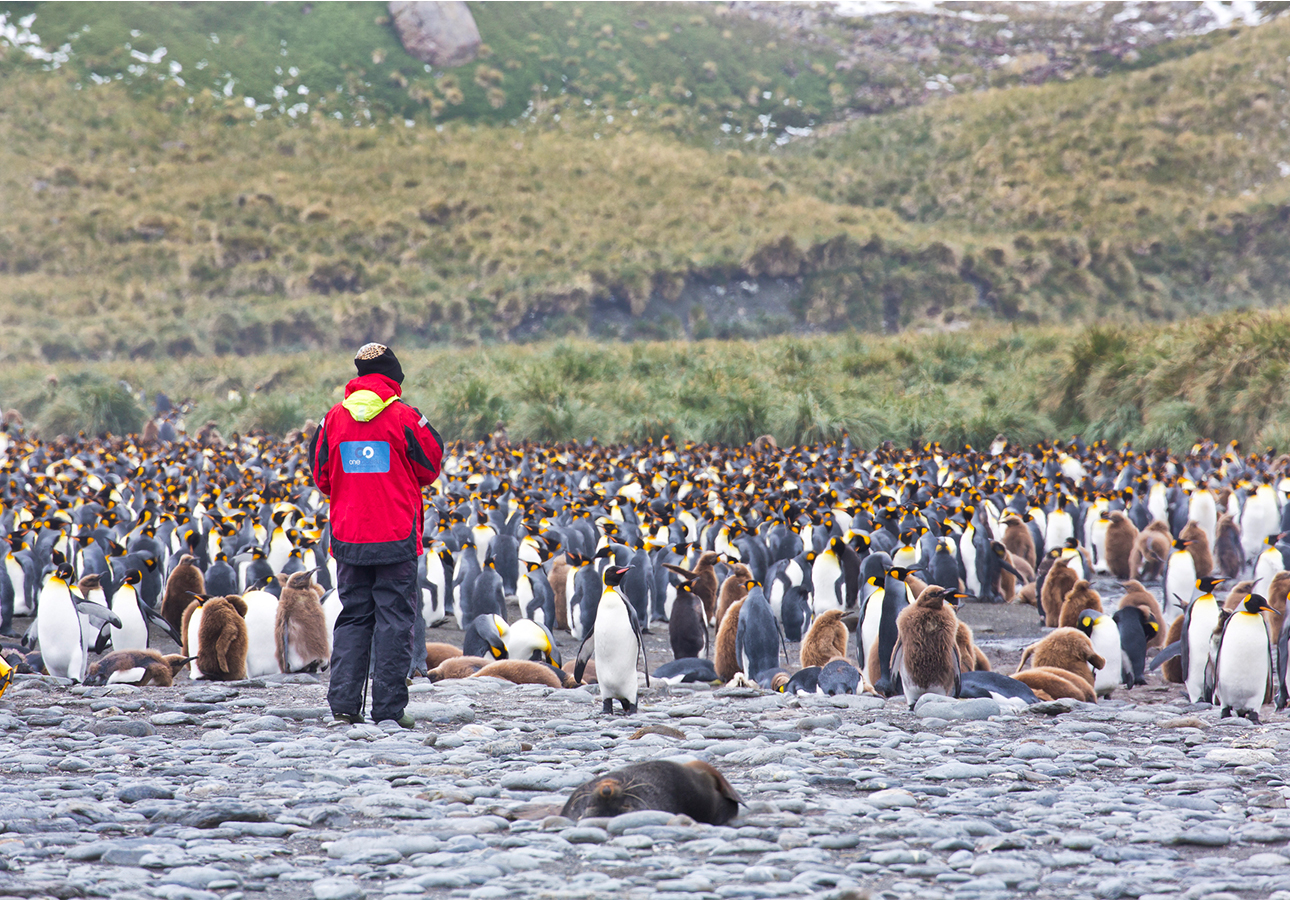
After enjoying South Georgia from a distance, we’ll head toward its numerous beaches to find a bay for your first excursion. Landing sites are varied, largely determined by the weather conditions. The sites you visit will deliver wildlife encounters unrivaled anywhere else on Earth. Biodiverse South Georgia—often described as the Galapagos of the south seas—is one of the most fertile breeding grounds in the world for sub-Antarctic wildlife, with beaches blanketed with penguins and seals.
It won’t take you long to realize that you are in a birder’s paradise, as burrowing seabirds, albatrosses, and petrels can be seen in abundance. You’ll find that South Georgia, once a popular base for whalers and sealers, is also scattered with abandoned relics and evidence of human activity from centuries gone by. Your Expedition Team will help bring those days to life when you visit old whaling stations and enjoy presentations on the South Georgia then and now.
One of the most significant sites you will visit on South Georgia is Grytviken. This settlement is one of the first whaling stations established in sub-Antarctic waters. Grytviken has a special appeal largely because it’s the site of the grave of Sir Ernest Shackleton, one of the most famous Antarctic explorers. Guests and expedition team members uphold a cherished tradition at the Grytviken cemetery, raising a toast to one of the greatest polar heroes.
Mid-October and early November are exceptional times to visit South Georgia, especially for wildlife enthusiasts. At this time of year, male elephant seals battle for control of beach sections, securing breeding rights for females entering their territories. These bouts are fought in bursts, with rest periods between clashes. As the largest pinniped species on the planet, watching these giants spar is a true spectacle. Mid-October and early November are exceptional times to visit South Georgia, especially for wildlife enthusiasts. At this time of year, male elephant seals battle for control of beach sections, securing breeding rights for females entering their territories. These bouts are fought in bursts, with rest periods between clashes. As the largest pinniped species on the planet, watching these giants spar is a true spectacle.
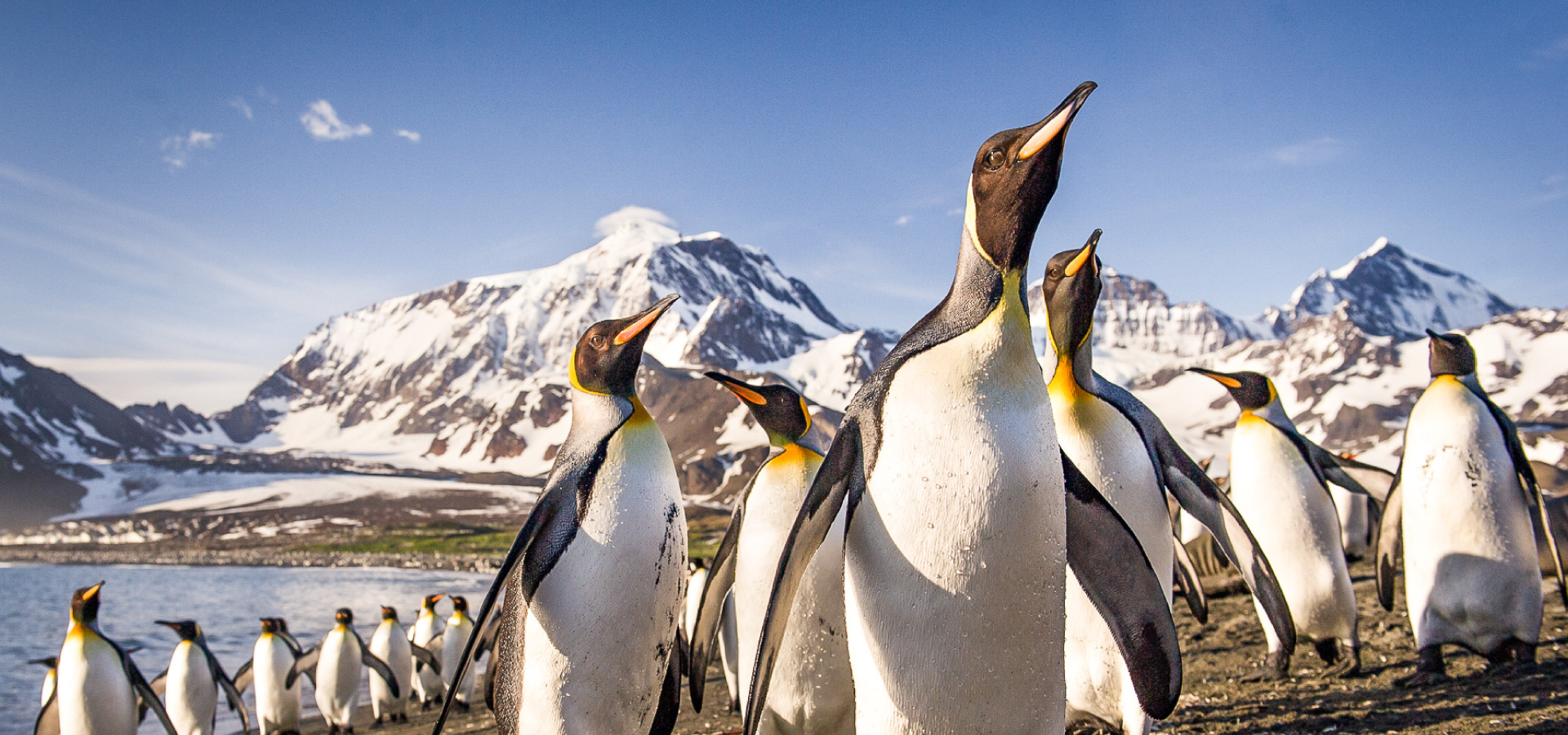
With extra time in South Georgia, we’ll have greater flexibility to explore more sites. If conditions allow, we may visit King Haakon Bay and the very beach where Ernest Shackleton and his party aboard the James Caird landed after their perilous journey from Elephant Island. If not, we’ll spend more time along the island’s leeward coast, aiming to visit its massive king penguin coloniesThe largest of these colonies. St. Andrew’s, which—by conservative estimates—is home to more than 150,000 breeding pairs.
We’ll also seek out macaroni penguin colonies—conditions permitting—as these birds favor rugged, exposed coastlines. Possible sites include Hercules Bay, Royal Bay, and Cooper Bay. Expect to encounter some of the island’s millions of petrels and prions. For those craving some active off-ship adventure, we plan to offer (weatherpermitting) an extended hike along the f inal stretch of the route taken by Ernest Shackleton, Frank Worsley, and Tom Crean to the Stromness whaling station in May 1916.
We’ll begin our westward journey through the Southern Ocean, crossing back over the Antarctic Convergence and passing near Burwood Bank—a shallow underwater plateau surrounded by deeper waters. All three of these dynamic regions can provide opportunities for bird-watching and marine mammal sightings, and we’ll feel the gradual shift from the chillier ecological Antarctic to the somewhat warmer environments of Tierra del Fuego.
If the skies are clear and visibility is good, we might catch our first views of the South American mountains on the horizon well before nightfall. As with other regions we’ve visited, the shelves near the continent can be rich with birdlife and occasionally marine mammals—but the journey isn’t over quite yet. After dinner, we will sail west through the famous Beagle Channel on our approach to Ushuaia, Argentina.
Tour Inclusions
Tour Pricing
Image Gallery